Things to Do in Tripoli, Libya
Where the Sahara meets the sea and the coffee tastes like cardamom and stories.
Top Things to Do in Tripoli
Find activities and tours you'll actually want to do. Book through our partners -- no booking fees.

Plan Your Trip
Essential guides for timing and budgeting
Climate Guide
Best times to visit based on weather and events
View guide →Day Trips
The best excursions and nearby destinations worth the journey
Explore day trips →Where to Stay
Best neighbourhoods, hotel picks, and booking tips
Find hotels →Travel Insurance
What's required, what coverage matters, and how to get a quote
Read guide →What to Pack
Climate-specific gear, essentials, and what to leave at home
See packing list →When Should You Visit Tripoli?
Tap a month for weather, crowds, and highlights
View full year-round climate guide →
Your Guide to Tripoli
About Tripoli
Tripoli wakes at dawn. The call to prayer rolls over the low white rooftops of the old medina, echoing off Ottoman walls thick enough to muffle the Mediterranean just meters away. The city smells of sea salt, diesel, and the sweet-bitter slap of cardamom from the ahwa stalls along Algeria Square. Old men in wool djellabas sip from tiny cups while arguing football scores from 1978.
Walk south through the Italian-era arcades of Green Square. Mussolini's architects left marble facades now pockmarked by decades of sandstorms. You'll hit the Friday market at Tagura. A dinar (about $0.20) buys a paper cone of roasted chickpeas still hot from the copper vat. Another dinar gets you a glass of fresh pomegranate juice that stains your fingers blood-red.
The medina's covered souks twist for kilometers. Pass the goldsmiths on Souk al-Dahab who weigh jewelry on scales older than your grandfather. Pass the spice heaps at Souk al-Harir where saffron costs more per gram than the silver next door. Spill out at the Arch of Marcus Aurelius, a 2nd-century Roman gate standing ridiculously intact between a cellphone shop and a bakery selling khobz still warm at noon.
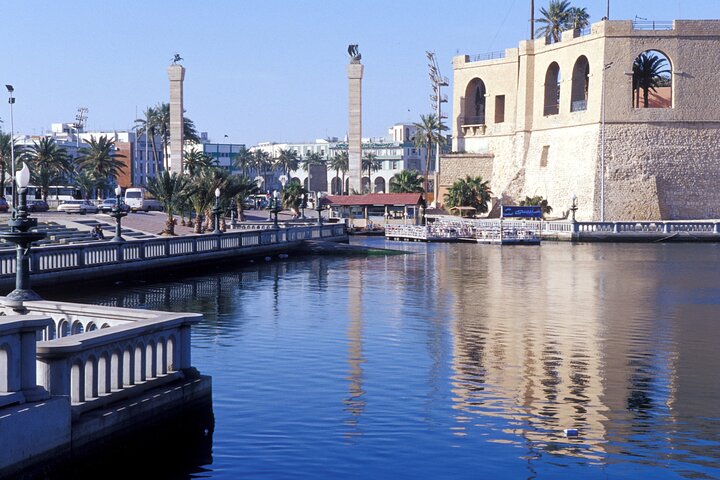
Power cuts hit without warning. The ATM network treats foreign cards like unwanted guests. When the sun drops into the Gulf of Tripoli and the fishing boats turn their green lamps on, the corniche fills with families strolling past corn-on-the-cob vendors. The scent of grilled bream drifts over from the restaurants near the castle.
That moment, call to prayer fading, waves slapping concrete, kids chasing each other between parked Toyotas, explains why Tripoli isn't a stopover. It's the place you remember when you've forgotten every other capital on the coast.
Travel Tips
Transportation: White-and-blue city buses charge 0.5 LYD ($0.10) flat fare. Drop coins in the box by the driver. Routes are posted only in Arabic and skip entire neighborhoods when drivers feel like it. Download the Mawgif app (works offline) to see which minibus heading to Tajura or Janzur has seats. Shared taxis leave from the clock tower on Algeria Square. Pay 2 LYD ($0.40) per seat if you wait for four passengers, 8 LYD ($1.60) if you buy the whole Fiat for yourself. The airport is 34 km south. A yellow airport cab demands 60 LYD ($12) up front. The 107 municipal bus makes the run every forty minutes for 1 LYD ($0.20) if your luggage fits on your lap. Traffic lights blink amber after midnight. Treat every crossing like a negotiation, not a rule.
Money: Libyan dinars are a closed currency. You can't buy them outside the country, and you can't legally take more than 100 LYD out when you leave. Exchange cash at the black-market rate on Souk al-Harir. Look for the guys with rubber-banded bricks of notes on plastic tables. Skip the official banks that give you 30 % fewer dinars for your dollar. ATMs inside hotels like the Radisson or Corinthia occasionally accept Visa. They spit out 100-dinar notes worth $20 and levy a 10-dinar fee. Carry small bills because taxis, coffee stalls, and even some museums will swear they have no change for a 20. Credit cards work only at high-end hotels and the supermarket chains. Budget cash for everything else.
Cultural Respect: Friday prayers empty the streets between 12:30 and 14:00. Restaurants shutter, taxis vanish. Strolling through the alleys with a camera then feels like walking into someone's living room during dinner. Greet shopkeepers with 'As-salamu alaykum' before asking prices. They'll reply 'Wa alaykum as-salam' and usually quote a friendlier figure. Women aren't required to cover hair. Sleeveless tops or shorts on either gender draw stares. Carry a light scarf for entering mosques like Gurgi or Karamanli. Shoes come off and shoulders need fabric. If you're invited for tea (three tiny glasses, each sweeter than the last), leave the smallest sip in the final cup. Finishing it signals you're ready to leave.
Food Safety: Tripoli restaurants cook with Mediterranean standards. Oil sizzling above 180 °C kills most bugs. Eat the fried fish straight off the dock at the fish market (5 LYD/$1 for a plate of red mullet) without hesitation. Stick to peeled fruit. The strawberries-on-a-stick sold outside the castle look tempting but get rinsed in tank water you don't want to meet. Bottled water costs 0.75 LYD ($0.15) everywhere. Check the seal because vendors sometimes refill with tap. If your stomach turns, pharmacies sell Entosec over the counter for 3 LYD ($0.60). The pharmacist will probably offer mint tea while explaining dosage. Street shawarma spinning since morning is safe after a quick reheat. Salads dressed at 3 PM are not.
When to Visit
April and October are Tripoli's sweet spots. Daytime peaks hover around 24 °C (75 °F). Evenings drop to a jacket-friendly 16 °C (61 °F). Hotel rates sit 20 % below the winter peak. May through September ramps up fast. July averages 32 °C (90 °F). The ghibli sand wind can spike afternoons to 42 °C (108 °F). Electricity demand soars.
Rolling blackouts knock out AC just when you need it most. Room prices crater 35 % in midsummer. Tolerable for budget travelers who can sleep through 28 °C nights. November brings the first rains. Sudden, short, and enough to flood underpasses. It also marks the start of wedding season. Banquet halls blast music until 2 AM.
Corniche hotels charge a 15 % premium on weekends. December, February is hoodie weather. Days sit at 17 °C (63 °F), nights at 9 °C (48 °F). Europeans fill five-star properties. Rates push up 40 % over summer. You get the olive harvest in the nearby Nafusa Mountains. The date-cookie festival happens in Gharyan. March is the wild card.
Occasional sandstorms cancel flights for hours. Hotel occupancy stays soft. The sea is warm enough for a swim without the summer jellyfish drift. Ram travelers should avoid Ramadan months. Dates shift yearly. Daytime eateries close. Nightlife goes dry. Families might prefer late October. Mild sea and half-term quiet await. Solo visitors on a budget stretch dinars furthest during the sweaty bargains of August.
More Ways to Experience Tripoli
Tours, day trips, and local experiences curated by on-the-ground operators.
Didn't see anything interesting yet?
Browse Viator's full catalog of tours, day trips, food experiences, and private guides in Tripoli.
See All Tripoli Tours on Viator